
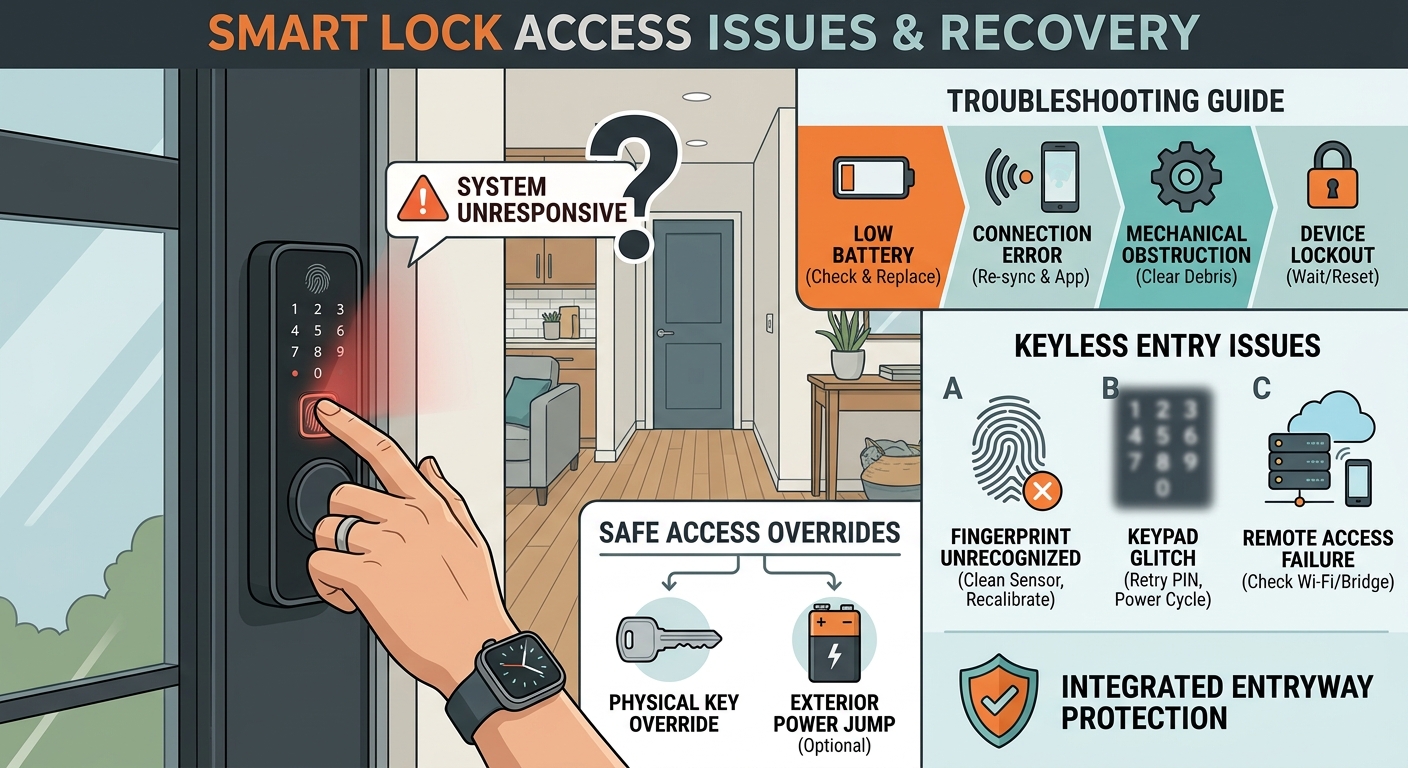
The practical answer for most renters is a retrofit device that attaches to the inside thumbturn of your existing deadbolt, motorizes it, and leaves the exterior keyhole, cylinder, and the door itself completely unchanged. From the hallway or the outside, the door looks exactly like it did before. Your landlord's key still works, and when you move out, you take the device with you and the door goes back to being an ordinary lock. What a retrofit device can't fix is the lease question itself: many tenancies restrict changing locks at all, and a landlord may need to keep a way in. This guide covers the device side plainly and treats the lease side as a real question to ask, not a rule to guess at.
Start with the device, since it's the part you fully control
A retrofit smart lock is built specifically for this situation. It attaches over your existing deadbolt's interior thumbturn (the part you already twist by hand to lock and unlock the door) and turns it electronically instead. Because it only touches the inside:
- Nothing changes on the exterior. The keyhole, the cylinder, and the door's appearance from the hallway or outside are untouched.
- Existing keys keep working. A landlord, building super, or anyone else with a key can still get in exactly as before.
- It travels with you. Most retrofit locks unscrew as easily as they attach, so when the lease ends, the device comes off the door and moves to your next place.
- Compatibility still matters. Retrofit devices are built for standard deadbolt shapes and thumbturn sizes. Check the manufacturer's compatible-lock list against your own door before buying; this is the most common reason a retrofit installation doesn't work out.
For the fuller comparison between this option and a full lock replacement, including when a full swap might actually make sense, see our guide to retrofit vs full lock replacement.
What a retrofit device does not solve
A retrofit lock only adds smart control to the inside of an existing deadbolt. It doesn't give you keypad or fingerprint entry from outside the door, since that would require replacing the exterior hardware, and it doesn't change anything about the door's physical security, which still depends on the existing lock's grade and the door and frame's condition, not on whether it's smart. If physical security grade is the question you're actually weighing, our comparison of smart lock vs deadbolt security covers that separately.
The lease question is real, and it's not one this guide can answer for you
Many residential leases restrict a tenant's ability to change locks, sometimes explicitly, sometimes as part of a broader "no alterations without written consent" clause. The concern from a landlord's side is usually access: fire and safety inspections, maintenance visits, and emergencies all assume the landlord or building management can get in, and a lock a tenant controls entirely can interfere with that. This varies by lease, by state, and by whether you're in a single-family rental or a multi-unit building with its own house rules, so it is genuinely a "read your lease and ask" situation rather than something with one universal answer. A retrofit device that leaves the existing key-based access working is the version of this decision least likely to create a problem, precisely because it doesn't take away the landlord's existing means of entry, but "least likely to create a problem" is not the same as "guaranteed to be allowed," and this guide isn't offering a legal ruling on your specific lease.
A few practical questions worth asking before you install anything:
- Does your lease say anything about changing or adding to the locks?
- Does your landlord or property manager need a copy of any new key or code, or a way to override the smart device in an emergency?
- Are you expected to restore the original hardware exactly before move-out, and did you keep the original screws and parts to do that?
Where a retrofit lock fits into a renter's broader setup
Smart locks are usually one piece of a renter's wider security setup, alongside cameras and sensors chosen for the same no-damage, no-drill constraint. Our guide to security cameras for renters covers the equivalent decision for cameras, and if you're building the whole setup from the ground up, the pillar guide to a smart home security system without a monthly fee walks through build order for any household, renter or owner.
What to check before you buy
- Read the lease clause on locks and alterations, or ask your landlord directly if it isn't clear.
- Confirm the retrofit device is compatible with your existing deadbolt using the manufacturer's compatibility list.
- Keep every original part: the thumbturn, screws, and any strike plate hardware, somewhere safe so the door can go back to its original state.
- Plan for what happens at move-out, including how long re-installation of the original hardware actually takes, so it's not a surprise on your last day.
- Decide whether the landlord needs a backup way in, and have that conversation before installation rather than after a maintenance visit gets awkward.
FAQ
Can I install a smart lock in a rental without asking my landlord? That depends entirely on your lease. A retrofit device that leaves the exterior lock and keys untouched is the option least likely to conflict with a typical lease, but many leases restrict changing or adding to locks regardless, so check yours or ask directly rather than assuming.
Will a retrofit smart lock damage my door? Most retrofit devices are designed to attach without drilling new holes, using the existing deadbolt's thumbturn and screw points. Read the specific product's installation guide, since designs vary, and keep the original hardware so the door can be restored exactly.
Does my landlord still need a key if I add a retrofit lock? Yes, in the sense that the existing exterior cylinder and any keys already cut for it continue to work normally, since a retrofit device only motorizes the inside. If your landlord needs a way to override the smart device itself in an emergency, that's worth discussing directly rather than assuming the physical key alone covers it.
Can I take the smart lock with me when I move? Generally yes. Most retrofit locks attach and detach without permanent modification, so removing the device and reinstalling the original hardware is usually straightforward, provided you kept the original parts.
Is a full lock replacement ever appropriate for a renter? Rarely, since it changes the door's exterior hardware and typically requires the landlord's approval and a plan to restore the original lock before move-out. See our retrofit vs replacement guide for the fuller comparison of what each option changes.

I’m John Smith, the founder of Homegadgetguru.com. I use my IT background to extensively test home automation setups in my own house, giving you the hands-on, practical advice you need to build a smarter, more connected home.