
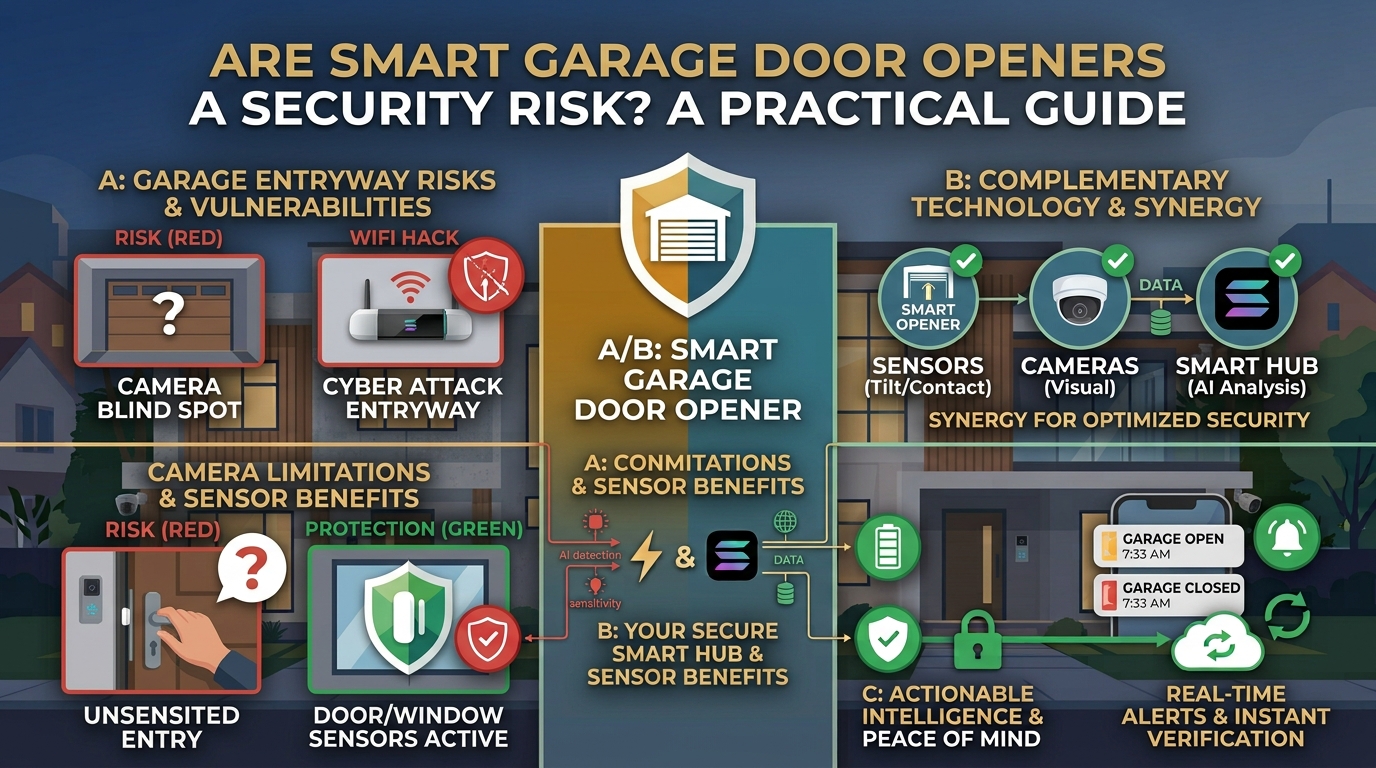
A Wi-Fi-connected garage door opener carries real but generally low-probability security risk. Like any network-connected device, it can ship with default credentials, use a weaker wireless pairing protocol, or run outdated firmware, and security researchers have publicly documented vulnerabilities in specific models in the past. The practical risk to most households is low, but it is worth taking seriously anyway, because a garage door is a large, direct entry point, often connected straight into the interior of the house, not a side device tucked away in a corner of a network.
The fix is not exotic. It is the same basic hygiene that applies to any smart device: a strong, unique password, prompt firmware updates, and two-factor authentication where the manufacturer offers it.
What actually makes a smart garage opener vulnerable
The vulnerability classes here are the same ones that affect connected devices generally, applied to a device that happens to control a large physical door. Devices frequently ship with default usernames and passwords that are publicly documented and easy to look up, which is a real risk if never changed after setup. Wireless pairing and remote-control protocols vary in how well they resist interception or replay, and some have known weaknesses that have been demonstrated by security researchers. Outdated firmware, like on any connected device, can carry unpatched vulnerabilities that a manufacturer has already fixed in a newer version.
None of this is unique to garage door openers specifically. What is specific to this device is what a successful attack would actually open.
How real is the risk, honestly
The honest, non-alarmist answer is that the realistic chance of a given household's smart garage opener being specifically targeted is low. Most attacks on connected devices are broad and opportunistic, scanning for default credentials or known unpatched vulnerabilities across many devices at once, rather than someone deliberately targeting one house's garage door. Security researchers have publicly documented vulnerabilities in multiple Wi-Fi garage opener models in the past, which is why the basic hygiene steps below matter, but this is not a reason for alarm on its own, and it is not fundamentally different from the same general risk that applies to any smart home device.
This is the same balance this site strikes with whether security cameras can be hacked: real risk exists, it is manageable, and it is not a reason to avoid the convenience these devices offer.
Why the garage door matters more than a typical smart device
A smart plug or a smart bulb, if compromised, is an inconvenience. A garage door is a large physical opening, often the largest door on the property, and in most homes it connects directly into the house itself rather than requiring a second point of entry once someone is inside the garage. That combination, a big opening plus a direct interior connection, is why this device deserves a bit more attention to basic security hygiene than, say, a smart light bulb, even though the underlying vulnerability classes are the same.
The basic hygiene that closes most of the gap
A short list closes the large majority of realistic risk here. Change any default username or password immediately after setup, since this single step removes the most commonly exploited vulnerability class outright. Keep the opener's firmware updated, since manufacturers do patch known issues over time and an outdated device stays exposed to problems that have already been fixed. Enable two-factor authentication on the account if the manufacturer offers it, adding a second check beyond the password alone. None of these require any technical expertise beyond what setting up the device already involves.
How this connects to the rest of your network security
A smart garage opener is one more device on your home network, and it benefits from the same foundational hygiene that protects every other connected device in the house: a strong, unique Wi-Fi password, and awareness of what is connected to your network in the first place. This site's guide to security cameras and power or internet outages covers a related dependency worth thinking about together: a garage opener that relies on an internet connection to work remotely will also stop responding to app commands during an outage, the same limitation that applies to Wi-Fi cameras.
For the other major connected entry point most homes have, this site's guide to smart locks without Wi-Fi covers the parallel question for door locks specifically.
Signs something is wrong
A garage door that opens or closes on its own without a command, unexpected notifications from the opener's app, or an account showing a login or access event you do not recognize are all worth acting on immediately: change the account password, check for a firmware update, and review connected devices in the app if that feature exists. None of these signs are common, but they are the practical, concrete things to watch for rather than a vague sense of worry about connected devices generally.
Choosing between a smart opener and keeping it simple
Not every household needs a Wi-Fi-connected garage door opener, and it is a reasonable choice to keep a traditional, non-connected opener if the main appeal of the smart version, remote monitoring and control from an app, is not something you actually expect to use regularly. A traditional opener has essentially zero digital attack surface, since there is nothing to log into and nothing running firmware that could go unpatched.
For households that do want the remote convenience, whether that is checking the door closed while away or granting temporary access to a delivery or service provider, the basic hygiene covered above closes the large majority of the realistic risk. The decision is less about whether smart garage openers are inherently dangerous and more about whether the convenience is worth the small, manageable maintenance responsibility that comes with any connected device.
A quick setup checklist
Right after installing or setting up a smart garage door opener, a short list is worth working through once: change the default username and password to something unique, check whether the manufacturer offers two-factor authentication and turn it on if so, confirm the app is set to notify you of firmware updates rather than silently skipping them, and review who currently has access if the opener supports shared or temporary access codes, removing any you no longer recognize or need. None of this takes more than a few minutes, and it is the single highest-leverage use of time for securing the device.
FAQ
Can a smart garage door opener actually be hacked?
In principle, yes, mainly through default credentials, weaker wireless pairing protocols, or unpatched firmware. Researchers have publicly documented vulnerabilities in specific models in the past, though the realistic risk to any one household is low.
Is a smart garage opener less safe than a traditional one?
A traditional, non-connected opener has no digital attack surface at all, so it avoids this category of risk entirely. A smart opener trades that for remote convenience, which is manageable with basic account hygiene.
What is the single most important step to secure a smart garage opener?
Changing any default username or password immediately after setup. This closes the most commonly exploited vulnerability on its own.
Does a power outage affect a smart garage door opener?
Yes, if it depends on an internet connection for remote app control, that feature will stop working during an outage, similar to how Wi-Fi security cameras behave in the same situation.
Should I avoid smart garage door openers because of this risk?
Not necessarily. The realistic risk is low and manageable with basic hygiene: a strong unique password, firmware updates, and two-factor authentication where available.

I’m John Smith, the founder of Homegadgetguru.com. I use my IT background to extensively test home automation setups in my own house, giving you the hands-on, practical advice you need to build a smarter, more connected home.